Water Mains
From wooden pipe to metal pipe: the St-Pierre water main passed from Ernest Dion’s private network in 1894 to the municipality in 1956, with the 1919 rates and obligations for users.
Written in French by Claudette Fournier, May 25, 2015. Quotations from period documents are left in the original. Lire l’original en français.
In this article
Water Mains
FROM WOODEN PIPE TO METAL PIPE
Water-main networks appeared in Québec during the nineteenth century. Faced with a pressing need for good-quality water, the cities equipped themselves with infrastructure between 1800 and 1850. The villages gradually followed suit up to the early 1900s. It took nearly thirty years more before the rangs (concession roads, or rows of farm lots) were served in their turn. For a number of years the networks were for the most part run by private owners, or in some cases by cooperatives of users. The water came from the watercourses and springs on the territory and was carried through the network under pressure or by gravity, by steam pumps and by water wheels, in wooden pipes that were then connected to the buildings. By the end of the 1950s, almost the whole territory of our seigneury was linked to one network or another.
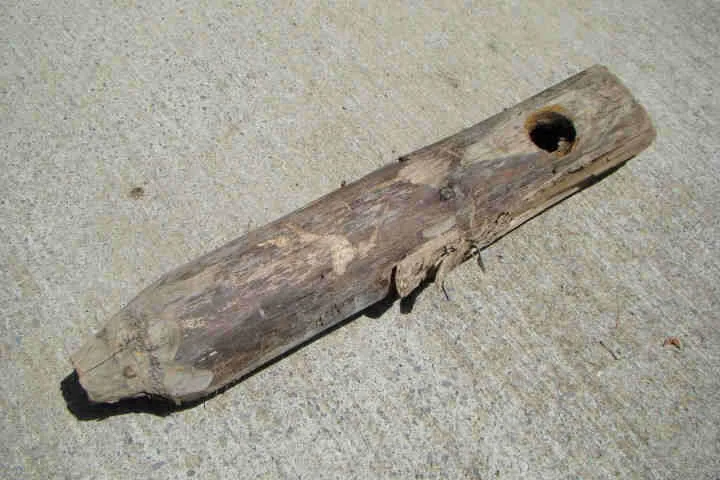
Over time the system ran into difficulties: the quality of the water was often the subject of complaints, the regular leaks were exasperating, the risk of illnesses contracted from unsanitary water was rising, the poor performance during fires worried citizens and elected officials alike, and on top of that the insurance companies and the provincial public-health service were putting more and more pressure on the municipalities.
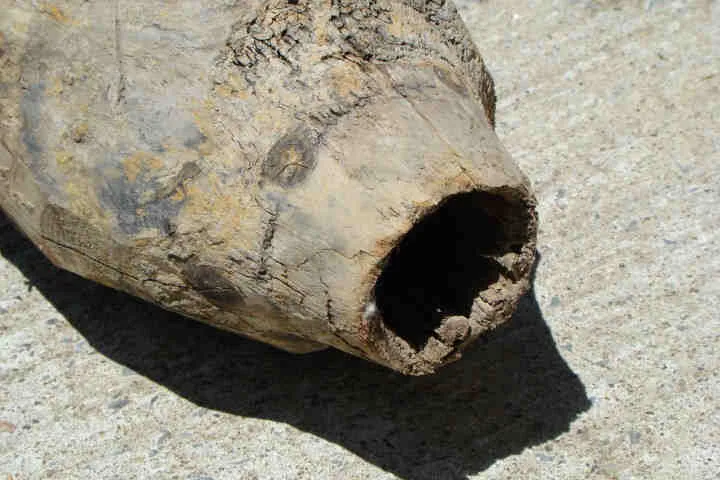
And so we see the system pass into the hands of the municipalities, which over the years undertook major works: connecting the various branches, changing the piping over to metal, moving from steam or gas pumps to electrification, looking for new supply reservoirs, building pumping stations, taking measures to prevent water pollution and … adjusting the taxes.
Wooden pipes still exist in a good many of the private service lines of houses dating from the beginning of the century. During the “modernization” of the water-main networks, the metal pipes were quite simply inserted inside the wooden ones
The Saint-Pierre-les-Becquets Water Main
FROM A PRIVATE NETWORK TO A PUBLIC ONE
1894: On 1 October, Mr. Ernest Dion, carpenter and wheelwright, became the owner of a water main serving the village of St-Pierre.
1898: On 6 September, the municipal council granted Mr. Dion, for twenty-five years, the right to operate the village network, which was required to supply subscribers with suitable water.
Annual cost to users: $6
1919: Mr. Ludger Sauvageau, « fabricant de beurre » [butter maker], acquired the network from Madame Veuve Élieusippe Dion. On 24 September the council granted him the privilege, for twenty-five years, of operating and administering a water main in the 1st rang. The inhabitants of the first rang were to be served, from the St-Jean-Deschaillons boundary as far as the iron bridge by the church.
1922: Following the change made to the road near the Paris and Fournier hill, Mr. Sauvageau formally demanded that the municipality take on the costs tied to the alterations he would have to make to his connections, or else pay him $400 so that he could carry out the work himself.
1925: Mr. Sauvageau served notice on the municipality that the council was to take the steps needed to allow him to cross private land in order to do the work arising from the changes made to the route.
1927: Official notice from the municipal council to Mr. Sauvageau to bring the water main into line with the sanitary regulations, by submitting an engineer’s plans and specifications within one month.
1930: Valuation of the system: $10,000. Creation of a cooperative society, to be managed by the Société d’administration et de Fiducie, which would frequently contest the taxes charged by the municipality.
1931: On 14 February, a petition signed by twelve inhabitants from the upper boundary of the 2nd rang demanded that the municipality invest $4,000 of the unemployment grants it had received in creating a line five or six miles long. (Signatories: Edmond Lafond, Alfred Brunelle, Georges Fournier, Alphonse Trottier, Médéric Lafond, Onésime Marchand, Achille Turcotte, Alfred Gervais, Philippe Baril, Ovide Nault). A society of bondholders was set up to administer this network.
1956: Purchase of the network by the municipality of St-Pierre from Mr. Maurice Mailhot.
1966: Rebuilding of the network at a cost of $525,000, and purchase of the spring in the 5th rang west of Ste-Sophie, where Mr. Paul-Émile Morissette’s sawmill stood. Little by little the “branches” were joined together and the territory of St-Pierre came to be served by a single network.
Sources: Tricentenaire Lévrard-Becquet and the archives of the municipality of St-Pierre
IF YOU HAD BEEN A USER
OF THE WATER-MAIN NETWORK… in 1919

TERMS AND OBLIGATIONS
1) The owner undertakes to supply drinkable and suitable water to the ground floor or first floor only of private houses or other buildings.
2) Consumers have the privilege of fitting branch lines to carry the water to the various parts of those buildings.
3) The cost of the main pipe and the cost and expense of installing the « champleures » [taps] are borne by the consumer.
Annual rates:
– Private residence: $8.00
– Privy and bathroom: $3.00
– Cow barns and stables:



Fewer than 12 head of horned cattle, horses included:
- $1.00 per horse
- $0.75 per cow
- $0.50 per heifer
- $0.25 per calf
12 head of horned cattle and over: $8.00 +
- $1.00 per horse
- 0.75 per cow
- $0.50 per heifer
- $0.25 per calf
4) Owners are required to fit float balls in troughs and other drinking vessels so as to avoid water loss and other nuisances.
5) The owner of the network has the right to carry out a census at any time.
6) The tenant shall put up with the repairs.
Source: Taken from a 1919 document in the archives of the municipality of St-Pierre.
Claudette Fournier, SHGLB.
Where this article sits
About the Society
A group of volunteers researching, preserving and publishing the history and genealogy of the Lévrard-Becquet seigneury since 2002.
shglb.com/en/les-aqueducs/