Chapter 1: Our region, from prehistory to the arrival of the Europeans.
From yesterday to todayPart 2 of 5
From the glaciers to the Champlain Sea and the sea’s withdrawal 9,600 years ago: the Cap St-Claude site before the Europeans came, and the traces left by its first occupants.
Written in French by Alain Manset, January 29, 2024. Quotations from period documents are left in the original. Lire l’original en français.
The prehistoric period before any human presence
Long, long ago, more than 15,000 years back, gigantic glaciers several thousand metres thick covered the whole of northern America.
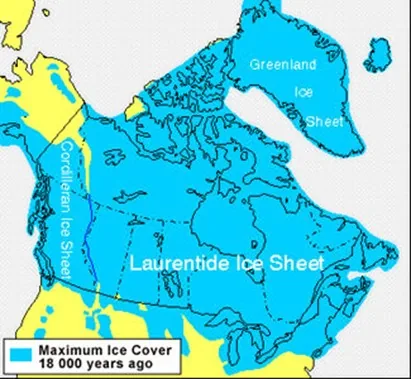
Then the climate grew milder, the glaciers disappeared, and the ground, relieved of their enormous weight, rose little by little, shaping the landscape; what is more, all the water released by the melting of that ice raised the level of the seas.
On this site we can watch how that vast upheaval of the region's geography unfolded.
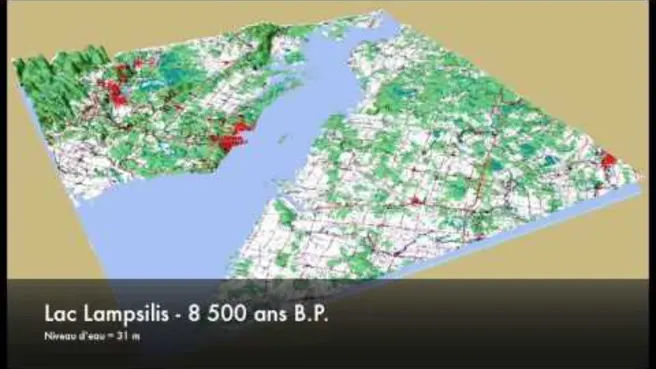
About 13,000 years ago, the Champlain Sea formed, flooding everything that later became the St. Lawrence valley; no human occupation was possible, because our whole region lay under many tens of metres of water.
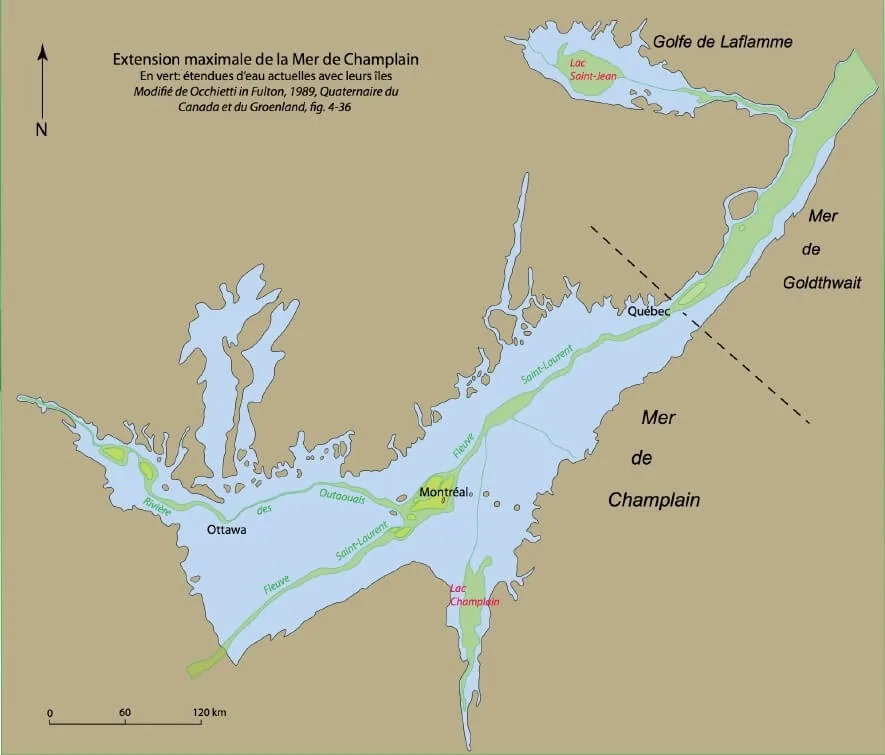
Then, 9,600 years ago, the sea gradually withdrew, giving way to often rich land alternating sandy zones, clay deposits and shales holding natural gas; rocks of every size, from gravel to field stone to enormous erratic boulders, are the deposits left behind by the great glaciers as they melted.
Everything was in place to receive a human presence.
The first people
Three thousand years ago, people, still few in number, were already travelling across the territory where we live today; they fed on what nature provided; game was plentiful, and so was fish; the land gave wild berries, and some had discovered how to grow vegetables, squash, beans and corn.
The St. Lawrence valley was a major travel route, whether for trade between tribes, the search for food, the search for wintering grounds, or raids against enemies.
Some peoples were pushed out by other tribes looking for territory large enough to ensure their own survival; it was the “struggle for life”. The phenomenon is still with us today, on a worldwide scale.
Traces of an Indigenous presence have been found in the Bécancour area: the ruins of dwellings, stones worked into arrowheads or scrapers, tools made from deer bone, and pottery.
The Cap St-Claude site, where the present church of St-Pierre-les-Becquets stands, was certainly a sought-after place to set up camp; the view stretched far both upstream and downstream, the spot overlooked the banks of the river, and the cliffs gave protection from incursions; there was no shortage of wood for building shelters and for roasting the abundant game; the ground was well aired and not marshy. The church brook gave pure water in those days, not to mention the river itself, which served as a highway, with its stocks of fish, its eels and sturgeon, its ducks and Canada geese.
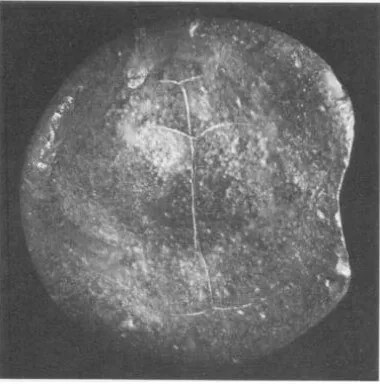
A few kilometres further west the archaeologist Normand Clermont studied engraved limestone slabs found by Lionel Villeneuve on his property at 568 Marie-Victorin; they date from the Woodland period, before the arrival of the Europeans, but their use or meaning remains obscure.
So, before the arrival of white settlers, Indigenous people were asserting their presence in the region, setting up temporary or permanent camps, criss-crossing the territory in search of food, making contact with related groups or driving off rivals, and trading goods: worked stone, tools and ornaments.
Iroquoians and Algonquians shared the region in different ways before the Europeans came; the Algonquians occupied the territory seasonally rather than permanently, unlike the Iroquoians.
Then the white men appeared…
In this series
- From Yesterday to Today
- Chapter 1: Our region, from prehistory to the arrival of the Europeans.
- Chapter 2: Our region — the arrival of the first Europeans (1534–c.1600)
- Chapter 3: Romain Becquet, seigneur in spite of himself (1640-1682)
- Chapter 4: Louise Mousseau (Monceau), the guardian (1635-1707)
Where this article sits
Read next
About the Society
A group of volunteers researching, preserving and publishing the history and genealogy of the Lévrard-Becquet seigneury since 2002.
shglb.com/en/notre-region-depuis-la-prehistoire-jusqua-larrivee-des-europeens/